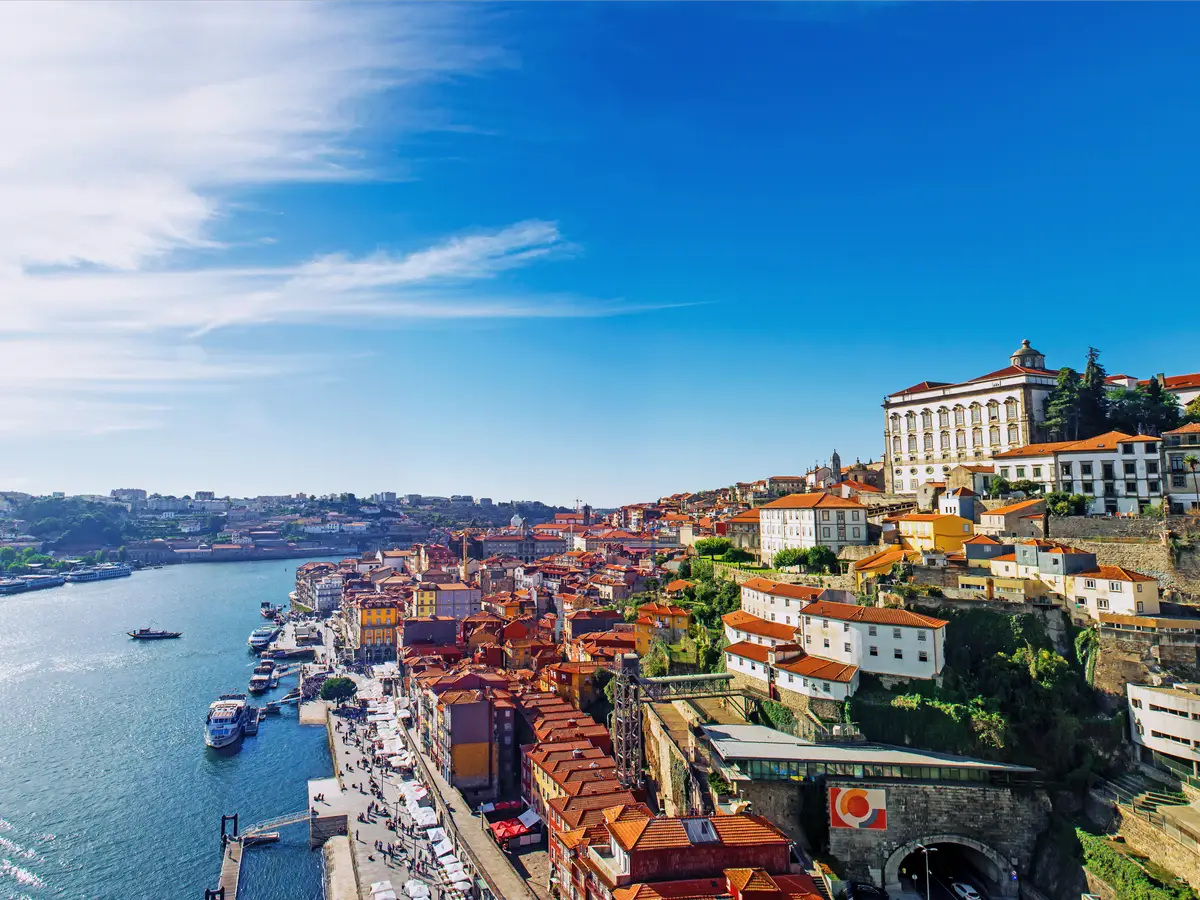
Are Americans ruining Portugal? If you go online and read the headlines and especially watch YouTube, you would definitely think that's the case. But is it true? Of course, there have been a lot of Portuguese citizens out in the streets over the past few years protesting things like high housing prices, but who is to blame?
I've been wanting to talk about this for the last few years, but I was afraid to make this news because I didn't want to create a lot of controversy, but what I've noticed a lot lately in phone calls with prospective relocation clients is that people really want to move or retire abroad in Portugal, but they're afraid to because they don't want to be those ugly Americans who are adding to the problem.
So, in this news, I want to dive deeper into the data behind the headlines and clear things up. So, if you've been thinking of moving to Portugal, but you didn't want to because you didn't want to ruin the country, then this news is for you.
Now, before we get started here, I do want to add a disclaimer because I am not an economist. I am not a statistician. I don't work for any government, and I'm not Portuguese. So this is just my perspective as a US citizen who's been helping people move abroad for the past 20 years.
I've been watching the movement of people around the world, expats, digital nomads, immigration, and I've also been to Portugal quite a few times. So this is just my opinion on the topic based on research and data. But make sure to do your own research before making a decision.
All right, so let's start with what's actually happening, which is that the number of US citizens living in Portugal is increasing. There's a lot of numbers out there depending on where you look, but from my research, it shows that since 2017, the number of Americans living in Portugal is going up. It was 3,000 just a few years ago, and now you can find reports of anywhere from 10,000 to 21,000 US citizens living in Portugal.
That number might be even higher because that's counting the people that just have visas or residency permits there. There could definitely be a lot of other slow travelers, roaming retirees, and digital nomads who are also spending a good amount of time in Portugal without being one of these statistics.
But here's what those headlines don't tell you. As of 2024, there are over 1 million foreign residents living in Portugal. And so, US citizens could make up about 10 or 20,000 out of that number. So, that's just about 1% of the foreign resident population. Hardily enough people to be able to ruin the country.
But here's something fascinating that actually happens quite a lot is that uh citizens of the country tend to overestimate the number of foreigners who are living there. So, according to a 2024 report by the European Commission, it says here that 42% of Portuguese people actually overestimate how many foreigners live there, with some thinking that it's almost double what it really is.
So, based on this survey, one in four respondents believe that foreigners make up more than 30% of the population of their country, when in reality, it's closer to 10%.
But what does it mean to actually ruin a country and overrun it with people? Typically, when we see this in headlines or we hear about it in conversation, people are talking about three things. One is gentrification. Two is higher prices, whether that's for housing or living expenses. And three is an impact on culture, typically negative.
Now, I've been traveling the world for more than 20 years. And one of the things that I've personally noticed in different countries is that the countries that do have more migration tend to have just a lot more diversity. So I don't want to say that migration is a bad thing and it's something that's been happening throughout human history. People have always been roaming around the planet the same as all other types of animal species who migrate around the globe and this is going to continue to happen.
So it's really important to look at it for what it is and what the realistic impact is on a country.
So let's look at the gentrification and rising prices piece. And this a lot of times has to do with the housing market. It's no secret that prices have been going up in Portugal and there has been a housing crisis for some time now.
Um, but while there's a lot of focus of headlines on US expats being the cause for these rising prices, the data shows that a lot of the issues, especially in places like Lisbon, come from tourism and short-term rentals.
So, when you look at that 30 million annual arrivals into Portugal, a lot of those people are renting short-term rentals and they're not necessarily all coming from the United States. So out of those 30 million people, only 1 million are coming from the US.
The top countries for tourism in Portugal are actually Spain contributing 25% of the total arrivals. The United Kingdom is second, contributing 12% and then third is France contributing 11.6% of international tourists. Germany, Italy and the US are also large sources of international tourists and over tourism is a whole another topic in and of itself that has a lot of both positive and negative impacts but you know most countries are constantly trying to increase their tourism arrivals and with that comes extra pressure in different ways on the economy.
 Now, the Portugal's Golden Visa program, the real estate category of the Golden Visa program, has also received a lot of blame in this case. It's been really difficult to find exact numbers for this. Uh, but it does look like at least 12,000 real estate golden visas have been issued in Portugal where people could buy their way into residency with a 500,000 euro investment. that program was discontinued a couple years ago.
Um, but US citizens have kind of been wrapped into that as one of the causes for the housing crisis in Portugal. But if you look at the numbers, Golden Visa real estate purchases represented less than 1% of all of the property transactions in Portugal.
And out of those 12 or 14,000 visas that were actually granted, the numbers vary, but it looks like anywhere from between 500 and 800 or 900 of those went to US citizens. Actually, the top countries were China and other country citizens who were receiving those visas.
So while that definitely had an impact and I think that's one of the reasons why the government cancelled that program, it's um not telling the whole story to kind of wrap that into the discussion of you know US citizens overrunning Portugal.
Studies from organizations within Portugal site inflation, booming tourism, and increased housing demand to be the real drivers in higher housing prices, not necessarily golden visas or, you know, US expats who are living in the country.
 There's also an argument that, you know, US citizens are overburdening the health care system in Portugal. I wasn't able to find a lot of data on that, but I think, you know, there's there could be something there. But again, we're looking at a really small number of people, you know, a few thousand people of retirement age compared to a population of more than 10 million people.
I don't know if that's going to have a huge impact on the system, but um people from the Portuguese system, from the you know, healthare system, from the government would be able to speak more to that.
So my perspective on this after having traveled to more than 65 countries since I was a teenager is that I think that the the hype on YouTube and the news headlines are are just that. You don't see news headlines so much blaming Spanish tourists for ruining Portugal. It's more like Americans that are moving to Portugal are ruining it.
I tried so hard to get Portuguese people to contribute to this news. And a lot of them were either confused, like they didn't have an opinion on this or they kind of asked me like what was I talking about.
Um, so I actually couldn't get any Portuguese people to like tell me what they really thought of this, but it led me to believe that maybe it's not a big issue from the Portuguese people's perspective. Maybe it's just something that us as Americans are afraid of doing. Like we're we're afraid to we don't want to be responsible for ruining a country.
But also it's um it's a big leap to think that you know you should not follow your dream of living in Portugal because you think that your presence there will have more of a negative impact than a positive impact.
 There's a lot of ways to make a positive impact in a country. first by you know being there and spending money um being a part of the community integrating with that society contributing in some way volunteering. You don't have to just take from that country like you being present in a country doesn't have to be detrimental to that country you can bring a lot to the table.
And last time I was in Portugal I spent a lot of time in Madera and they have the nomads giving back organization there and they're doing a lot of really amazing work there and Portuguese people from all over um Portugal, Portuguese digital nomads were going to Madera to join into that international community.
And so I do think when people from different backgrounds come together, it can create something new and um the world would be quite a weird place if we didn't allow any movement of people across borders.
I've also never personally experienced this type of anger or discrimination in my travels. Uh there's a lot of fear from US citizens of, you know, not wanting to impose on other countries. And I think it's really good to be respectful of these countries and cultures.
But in a lot of uh scenarios, you know, anywhere I've been in the world, whether it was Fiji or Thailand or Latin America or Europe or Australia, like I've always felt welcome there. I've always felt that people were interested about learning where I was coming from. Um they met me in a place that was either neutral or positive and welcoming.
And I can't remember an instance where I really felt like I was unwelcome other than one time I was in Prague with my mom and we were buying gelato and this woman must have been having a really bad day because she just looked very angry and then we bought the gelato and she threw coins at me like she threw my change at me. I think I was probably like 24 years old or 25 years old.
So, aside from like a few little things like that, and no, I haven't found myself in the middle of riots in Spain over tourism or or things like that, um, I would be surprised if many people felt unwelcome when they went to a country.
And you know, maybe that's just anecdotal, but I just I talk to thousands of people every year who are moving abroad or traveling abroad, and I've never heard anyone say that they, you know, experienced what you see on the headlines in person.
So, are Americans ruining Portugal? I think no. But I think that the answer is complicated when you look at it on a macro scale.
The truth of the matter is that the world is becoming a smaller place because of technology, because of more affordable transportation and there's not one country's government or um citizens that can stop that. So I think it's really important as a global community that we look at these issues uh that we're honest about them that we you know try to create policies that are going to keep this world a livable place and you know respect the people respect the culture respect the environment there.
But I do think it's a huge stretch to blame you know a few thousand people living in a country for the you know fiscal and economic policies of a foreign government. It just there's so many other factors that play here.
Portugal is a really attractive place. It has great weather. It has a beautiful culture. It has amazing food. It has beaches. It It has so many things to do, so much history. I mean, the secret is out. Portugal is a great place.
It's one of the more affordable countries in Europe. And so, it's going to continue to be a destination for foreigners, for digital nomads, and uh for expats and immigrants alike.
Related
